

Last updated: October 9, 2026
Maybe you're sitting in a neighbor's kitchen right now. Your clothes still smell like smoke, your phone's almost dead, and somebody just handed you a cup of coffee you haven't touched.
If you're reading this after a fire, we're so sorry. Take a breath.
We'll go through what to do after a house fire in St. Louis in the order it comes up, starting tonight, then the next 24 hours, then the first 72 hours, with local numbers you can actually use. We're Arch City Stays, a local host with five furnished homes in St. Louis. If you need a place to stay, call (314) 248-9990.
What should you do after a house fire in St. Louis?
After a house fire in St. Louis, get everyone out and stay out until the fire department says it's safe. Call 1-800-RED-CROSS if you need a place tonight. Call your insurer to open a claim and ask about Additional Living Expenses, photograph the damage, keep every receipt, then line up a place to stay.
Quick checklist
- Get everyone out, and stay out until the fire department says it's safe.
- Get medical (or vet) care for anyone who was hurt.
- Let family know you're safe.
- Find a place to sleep tonight: family or friends, the Red Cross at 1-800-RED-CROSS (1-800-733-2767), or 2-1-1.
- Don't turn utilities back on yourself.
- Call your insurance company (your renters insurance if you rent) and open a claim.
- Tell the police the home will be empty, and ask your insurer about boarding up.
- Photograph and video the damage before you clean or toss anything.
- Keep every receipt.
- Request the fire report. In the City of St. Louis, email the Incident Report Request Form to FDreports@stlouis-mo.gov.
What to do after a house fire in St. Louis: the first few hours
You don't have to fix everything tonight. You just have to get through it safely.
Get everyone safe, and stay out
If the fire is still burning, get out and call 911 from a safe place, such as a neighbor's house (City of St. Louis). Don't go back inside until the fire department says it's safe. Floors and walls may not be as safe as they look (USFA, After the Fire; American Red Cross).
That includes "just running in" for a purse or a phone charger. It can wait.
If doors or areas are marked with colored tape, or a building inspector has posted a sign on the home, don't go past it until local authorities say it's safe (Red Cross, Checking Your Home After A Fire).
Get medical (or vet) care if anyone was hurt
Anyone who's seriously hurt or burned needs professional care right away, and that goes for animals too (Red Cross, What To Do After A Home Fire).
Let people know you're safe
Send a quick message to family so they aren't worrying, which the Red Cross also recommends. One person can pass the word along.
If you need somewhere to sleep tonight
Start with the easiest option and work down the list:
- Family or friends. A spare room or a couch is fine for a night or two.
- The American Red Cross: 1-800-RED-CROSS (1-800-733-2767). The Red Cross in Missouri says it responds to house fires and provides immediate help with food, shelter, clothing and emotional support (American Red Cross, Missouri Region). Its Greater St. Louis Chapter tells anyone affected by a home fire to call that same number.
- United Way 2-1-1. Dial 211, or 800-427-4626, for local referrals, including shelter (211helps.org; USAGov).
- Your insurance company. If you have homeowners or renters insurance, call them tonight too. More on that below. If you don't have insurance, USFA lists the Red Cross, the Salvation Army, religious organizations and community groups among the places that can help (USFA).
If you'd rather have a whole house to yourselves, we can help with that too. See our five furnished homes in St. Louis.
Don't turn utilities back on yourself
Before they leave, the fire department will make sure the water, electricity and gas are safe or disconnected. Don't reconnect them yourself (USFA).
If you smell gas or hear hissing later, leave and call the fire department from a safe place (Red Cross, Checking Your Home After A Fire).
If you need somewhere to stay this week, call (314) 248-9990.
The next 24 hours
Tomorrow is for phone calls and paperwork. Keep a notebook or a notes app open the whole day.
Call your insurance company (or agent) and open a claim
Ask what they want you to do first and what they need from you (USFA; Missouri DCI, Post-Disaster Claims Guide). Write down your claim number and the name of everyone you talk to (Missouri DCI).
Then ask the big question out loud: "Does my policy cover temporary housing, how much, and for how long?" (Missouri DCI).
If you need money right away, ask whether they can advance you something for living expenses. Some insurers can. One state regulator, Washington's insurance commissioner, suggests asking for an advance in writing with an itemized amount. Every company handles this differently, so ask.
If you hit a wall with your claim, the Missouri Department of Commerce and Insurance has a consumer hotline at 800-726-7390 (Missouri DCI).
Renting? Call your renters insurance, not your landlord's
Your landlord's policy won't pay your living expenses. Standard renters policies include Additional Living Expenses, though (Triple-I).
Tell your landlord about the fire, too. USFA says to contact your landlord or mortgage lender.
Secure the house
Tell the police the home will be empty (USFA). Ask your insurer about boarding up windows and doors and about emergency repairs to keep more damage from happening. Save those receipts.
Don't make permanent repairs before you've talked with your insurer (Missouri DCI; Triple-I).
Document everything before you clean or toss anything
Take photos and video of the damage, room by room (Missouri DCI). It feels strange to film your own living room like this, but do it anyway.
Make an inventory of damaged items, and don't throw them away until the adjuster has seen them (Triple-I).
Start a receipt folder today
Hotel, meals, clothes, gas, a phone charger, all of it goes in the folder. USFA says the insurance company may need your receipts later, and Missouri DCI says your insurer will need them to repay you.
A plain envelope works fine, or you can just snap a photo of every receipt.
Get the fire report
For fires inside the City of St. Louis, the St. Louis Fire Department doesn't hand out reports by phone or in person. You fill out the Incident Report Request Form and email it to FDreports@stlouis-mo.gov. Have your claim number handy; the form asks for it. Reports are released only after the investigation is complete and approved, and some take several weeks (St. Louis Fire Department, Fire Investigation).
If the fire happened outside the City of St. Louis, ask the fire department that responded how to request its report.
By 72 hours: settle the basics
By now you've probably slept a little, maybe not much. Getting these sorted now will make the next few weeks easier.
Go back for important papers only if the fire department says it's safe
If you get the okay, look for important papers like IDs and insurance policies (USFA; Missouri DCI), then head back out. If medicines, glasses or hearing aids were lost, call your doctor, pharmacy or health plan about replacements (Missouri DCI).
Throw out food and medicine exposed to heat, smoke or soot
Even if it looks fine, throw it out if it was exposed (Red Cross).
Take care of your pets
Scared animals may bite or scratch, even sweet ones, so handle them gently. Keep pets out of the damaged house until cleanup is done (USFA).
Replace documents and burned money
Make a short list of what needs replacing: IDs, insurance policies, birth and marriage certificates, tax records (USFA).
If cash got burned, handle it as little as possible. The Bureau of Engraving and Printing has a free mutilated currency redemption process (USFA's guide points readers to it, too).
Tell the people who need to know
Let your mortgage lender or landlord know, along with your utility companies, and make arrangements for your mail (Missouri DCI; USFA). The post office can forward your mail while you're out.
Look after yourselves
The Red Cross recommends keeping an eye on how everyone in the family is handling the stress. USFA says to rest and ask for help. If someone is struggling, the 988 Suicide & Crisis Lifeline is there for them, and you can reach it by calling 988.
How insurance usually helps with housing after a fire (the short version)
If a covered fire makes your home unlivable, the Additional Living Expenses (ALE) or "loss of use" part of a homeowners or renters policy typically pays the extra cost of living somewhere else, up to your policy's limits. It doesn't pay your mortgage or your normal bills (Missouri DCI; NAIC; Washington State OIC).
Limits vary. Some policies cap the dollars and others cap the time, so ask your adjuster to put your limits in writing (Missouri DCI; NAIC).
If you stay with us, we can bill your insurer directly, and utilities are included. We've worked with several major insurers.
For the details on ALE, billing and how insurance housing gets arranged, see our guide to insurance temporary housing in St. Louis.
Where to stay after a house fire: hotel, family, or a whole furnished home?
So where do you actually go? Mostly, that depends on how long you'll be out.
The first night or two
A friend's place, a Red Cross-assisted stay or a hotel can get you through the first night or two. Nobody expects you to have a long-term plan on day one.
When repairs will take weeks or longer
Smoke and soot cleanup and repairs can take a while. Once it's clear you won't be home soon, a hotel room starts to wear on a family fast.
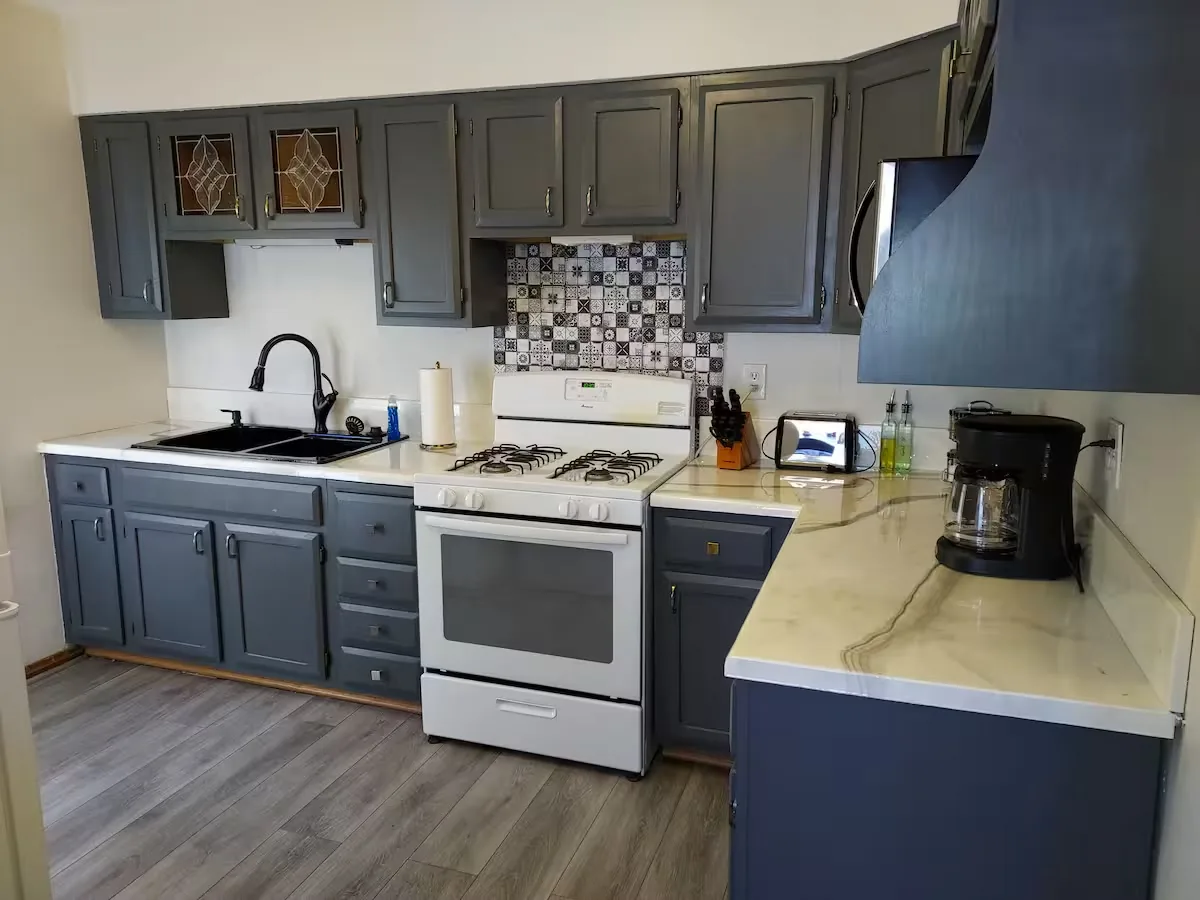
Here's what tends to matter in a whole furnished home:
- Keeping everyone together. One roof, instead of the family split across relatives' houses.
- A kitchen. ALE often covers extra meal costs when you can't cook at home (NAIC; Missouri DCI), but cooking your own dinner can make the week feel a little more normal.
- Laundry. Washington's insurance commissioner lists laundry as an ALE item, and you'll be washing smoke out of everything you saved.
- Room for pets. A dog cooped up in a hotel room is hard on everybody.
- Space to work and do homework. Life keeps going, school included.
What to ask before you book anywhere
- Does my insurer approve this place? Ask for the approval and the covered rate in writing.
- Can you bill my insurer directly?
- Are pets allowed?
- Are utilities included?
- Can I extend if repairs run long?
Our homes, briefly
Arch City Stays has five furnished homes in St. Louis, in or near St. Louis Hills, Hi-Pointe, Franz Park and Lindenwood Park: The Heritage House, The Family Comfort, The Midtown Classic, The Serene Stay and The Elevated Retreat.
And since you'll be asking us those same questions, here are our answers:
- You can book a few nights, a few months, or a year or more.
- Pets are welcome at all five homes.
- Utilities are included.
- Direct insurance billing is available, and we've worked with several major insurers.
You can see all five homes online, or call (314) 248-9990 and we'll help you figure out which one fits your family.

Frequently asked questions
What should I do first after a house fire?
Get everyone out, get medical or vet care for anyone who's hurt, and stay out until the fire department says it's safe (Red Cross; USFA). After that, find a safe place to sleep, call your insurance company to open a claim, and start saving every receipt.
Can I stay in my house after a fire if the damage looks small?
Not until the fire department says it's safe to go back in. Smoke can ruin things the flames never touched, and floors and walls may not be as safe as they look (USFA). Before you move back, ask your insurer about cleanup, and don't make permanent repairs until you've talked with them.
Does insurance pay for a hotel after a house fire?
Often, yes, if the fire is a covered loss and your home is unlivable. The Additional Living Expenses or "loss of use" part of your policy typically pays the extra cost of a hotel or rental, up to your limits (Missouri DCI; NAIC; Washington State OIC). Our insurance housing guide explains how insurance housing works.
Can my insurance company give me money right away?
Some insurers can advance money for living expenses, but it isn't automatic. Ask your agent or adjuster, and put the request in writing with an itemized amount (Washington State OIC). Keep your receipts either way so everything can be squared up later.
What does the Red Cross do after a house fire in St. Louis?
The Red Cross in Missouri says it responds to house fires and provides immediate help with food, shelter, clothing and emotional support (American Red Cross, Missouri Region). To ask for help in St. Louis, call 1-800-RED-CROSS (1-800-733-2767) (Greater St. Louis Chapter). Help is set up for people in exactly your spot, so don't hesitate to use it.
How do I get a fire report in St. Louis?
In the City of St. Louis, fill out the Incident Report Request Form and email it to FDreports@stlouis-mo.gov. Reports are released after the investigation is complete, and some take several weeks (St. Louis Fire Department). Outside the city, ask the fire department that responded how to request one.
Should I throw away smoke-damaged things?
Throw out food, drinks and medicine that were exposed to heat, smoke or soot (Red Cross). Hold on to damaged belongings, though. Make an inventory with photos, and don't throw them away until the adjuster has seen them (Triple-I). Ask your adjuster if you're not sure about something.
Where can my family and pets stay after a fire in St. Louis?
For the first night, try family, the Red Cross at 1-800-RED-CROSS, or 2-1-1. For longer repairs, a whole furnished home keeps everyone together. Pets are welcome at all five Arch City Stays homes, and same-day move-in is usually available, depending on which homes are open. Call (314) 248-9990.
Need a place to land after a fire? Call us
Give us a call at (314) 248-9990 and tell us your dates, who's coming (pets too), and your claim details if you have them.
Same-day move-in is usually available, depending on which homes are open. Pets are welcome at all five homes, utilities are included, and we can bill your insurer directly. You can book a few nights, a few months, or a year or more. You can also contact us online, and our FAQ page has more answers.
Take it one step at a time, and lean on the people who offer to help. When you're ready for a place to stay, we'd be glad to be one of them.