
If a fire, storm, burst pipe or major repair has pushed you out of your home, you're probably juggling a dozen calls right now. The insurance company. The contractor. Your kid's school. Your sister, who wants to know where you're sleeping tonight.
This guide is mostly about that last call. It covers how insurance temporary housing in St. Louis usually works, what to do first, how billing tends to go, and what to look for in a place to stay.
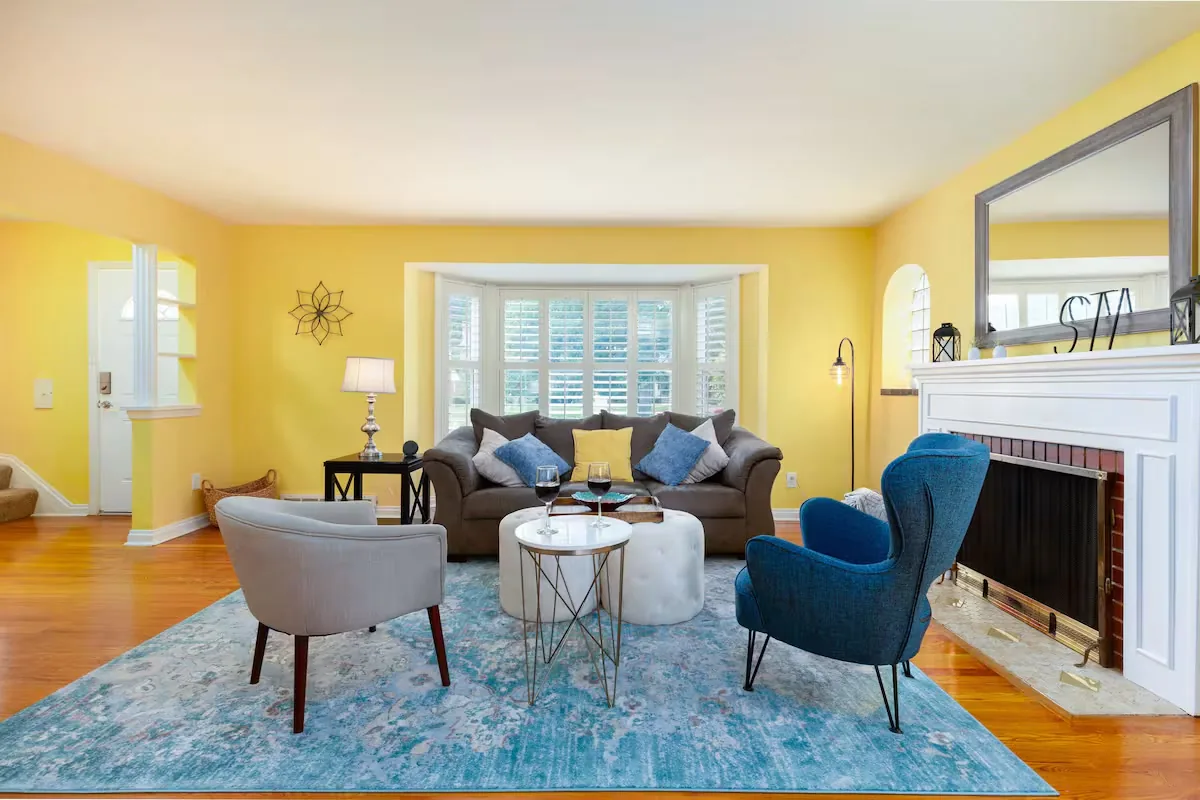
We're Arch City Stays, a local host with five furnished homes in St. Louis. You can book one for a few nights, a few months, or a year or more. Call us at (314) 248-9990.
How does insurance temporary housing work in St. Louis?
In St. Louis, insurance temporary housing is usually paid through the Additional Living Expenses (ALE), or "loss of use," part of your homeowners or renters policy when a covered loss like a fire or storm makes your home unlivable. It typically pays the extra cost of a hotel or furnished rental, up to your policy's limits. Call your adjuster first.
What is insurance temporary housing (ALE or "loss of use")?
Most homeowners policies have a section called Additional Living Expenses, or Loss of Use. On many policies it's listed as Coverage D. Renters policies usually have it too.
The Missouri Department of Commerce & Insurance (DCI) and the Insurance Information Institute (Triple-I) describe it the same basic way. If a covered loss makes your home unlivable, it helps pay for you to live somewhere else while it gets fixed.
Here's the part that surprises people. ALE pays the increase in your living costs, not all of them. Your mortgage and your normal bills are still yours. Missouri DCI's Post-Disaster Claims Guide and the NAIC both make that point.
So what counts as an increase? Consumer guides from the NAIC, Triple-I and Washington State's insurance commissioner list things like:
- A hotel or temporary rent
- Reasonable extra meal costs, beyond what you'd normally spend on groceries
- Laundry
- Extra mileage if your commute got longer
Some policies may also cover items like storage or pet boarding. Your policy decides, so ask.
One more catch. ALE typically applies to covered losses only, and Triple-I notes that flood is excluded from standard homeowners and renters policies. If water was part of the damage, ask your agent what applies before you count on it.
Homeowners vs. renters
Renting? You're not left out. Triple-I's renters insurance page says standard renters policies include ALE. It also says your landlord's policy won't pay your living expenses.
So if your apartment building had a fire, your own renters policy is the one to call about housing.
Limits on time and money
Every policy has limits. Some cap the dollars. Some cap the time. Missouri DCI and the NAIC both point out that those limits are separate from the coverage for repairs and belongings.
Triple-I says the ALE amount is "generally equal to 20 percent of the insurance on your home," and that some insurers pay more or set a time limit instead. That's a general figure, not your figure.
Ask your adjuster for your actual limits. Ask for them in writing.
What to do first when your home becomes unlivable (St. Louis checklist)
The first day is a blur. Here's the order Missouri DCI, Triple-I and the Red Cross point people toward.
- Get everyone safe, pets included. Don't go back inside until the authorities say it's safe.
- If you need somewhere tonight, call the Red Cross. The American Red Cross in Missouri responds to house fires and helps with food, shelter and clothing. The number is 1-800-RED-CROSS. If it was a fire, our list of what to do after a house fire in St. Louis walks through the first 72 hours.
- Call your insurance company or agent and open a claim. Write down your claim number, plus the name and number of everyone you talk to.
- Ask the question out loud. Missouri DCI's guide suggests asking whether your policy covers temporary housing, how much, and for how long.
- Document the damage and stop it from getting worse. Take photos and video. Make temporary repairs and save those receipts. Hold off on permanent repairs until your insurer approves them.
- Keep every receipt. Hotel, meals, laundry, gas. All of it.
- Tell your adjuster what your household needs. Bedrooms, pets, being close to work or school or a hospital, any accessibility needs, and how long repairs might take.
- Let people know you've moved. Notify your utilities, your mortgage company and the post office.
If the damage came from a federally declared disaster and insurance doesn't cover it, FEMA rental assistance may be available. Check FEMA's site for current details.
And if you have questions about how your policy is supposed to work, Missouri DCI runs a consumer hotline at 800-726-7390.
How insurance housing gets arranged (and where you fit in)
There's more than one way this goes. It depends on your insurer and your claim.
Through an insurance housing company
Many insurers hand temporary housing off to an insurance housing company. Your adjuster asks them to find a place, and they come back to you with options. When you've got nothing left in the tank, that can be a real help.
Arch City Stays has worked with several major insurers. If a housing coordinator is already on your claim, you're welcome to mention us.
Proposing a home you found yourself
A lot of people don't know they can ask. If you've found a furnished rental that fits your family, ask your adjuster whether it can be approved.
It might be. It might not.
Either way, get the approval and the rate they'll cover in writing before you book.
Hotel or a home?
A hotel is fine for a night or two. But you don't have to start there.
Our homes can be booked for a few nights, a few months, or a year or more. That means a family can move into a house on day one and stay put while the repair timeline gets sorted out. One less move, in a week that's already had too many.
For repairs that run weeks or months, a furnished home with a kitchen and laundry is often easier on a family. It can help on the claim side too. The NAIC and Triple-I both list extra meals as ALE items, Washington State's insurance commissioner adds laundry, and cooking at home usually costs less than eating out every night.
Direct billing vs. paying and getting reimbursed
Who pays the bill, and when? Again, it depends on your insurer and your claim.
Sometimes temporary housing is billed to the insurance company or a housing company. Other times you pay and then submit the charges through your claim. Your adjuster can tell you which way yours works.
So can we bill your insurance company directly? Yes. Arch City Stays can bill your insurer directly, and utilities are included. That's one less bill to track while you're dealing with everything else.
Call (314) 248-9990 before you book, and we'll set it up the way your claim needs. You'll find more answers about insurance billing and longer stays on our FAQ page, too.
Have these handy when you call:
- Your claim number
- Your adjuster's or housing coordinator's name and contact info
- The dates and rate your insurer approved, if you have them
Whichever way it goes, keep copies of everything. Every invoice, every email, every approval. It makes the claim go a lot smoother.
What to look for in a temporary home during an insurance claim
When you're tired and scrolling on your phone at 11 p.m., it's easy to grab the first place that's open. Here's what tends to matter once you're a few weeks in:
- An entire home, not a room. The family stays together under one roof.
- A full kitchen. Fewer restaurant meals, and fewer meal receipts to chase.
- Washer and dryer in the home. No hauling a basket of laundry out of the house.
- Room for your pets. Your dog had a rough week too.
- Parking. Especially if you're driving back and forth to meet contractors.
- Reliable wifi. Work and school don't stop because the house did.
- A sensible location. Close to work, school, a hospital like Barnes-Jewish or SLU Hospital if someone's in treatment, and close enough to your own house to check on repairs.
- Flexible length. Repairs slip. You want a place that can stretch with them.
- A local person who answers the phone. Somebody who knows the city.
Ask about every one of these before you book, wherever you end up staying. That includes us.
Furnished, pet-friendly homes in St. Louis for insurance stays
Arch City Stays has five entire, furnished homes in St. Louis.
The short version:
- Book for a few nights, a few months, or a year or more.
- Pets are welcome at all five homes.
- Same-day move-in is usually available, depending on which homes are open.
- We can bill your insurer directly, and utilities are included.
- Arch City Stays has worked with several major insurers.
| Home | Bedrooms / baths / sleeps |
|---|---|
| The Family Comfort | 2 / 2 / 4 |
| The Serene Stay | 1 / 1 / 2–3 |
| The Elevated Retreat | 1 / 1 / 2–3 |
| The Midtown Classic | 2 / 1 / 4 |
| The Heritage House, our three-bedroom home | 3 / 2.5 / up to 6 |
Each home's page has photos and the full details, or you can see all five furnished homes in one place. If you're not sure which one fits, tell us who's coming and we'll help you sort it out.
Every home comes with:
- Full kitchen
- Washer and dryer in the home
- Free parking
- Fast wifi
- Secure smart locks
- Smart TV
The kitchen and the laundry are the two you'll notice most by week two.
Bringing your pets
Pets are welcome at all five homes. When you call, tell us how many pets you have and what kind. That way we can point you to the home that fits your crew best.
Need somewhere to land tonight or next week? Call (314) 248-9990. Tell us your dates, how many people and pets, and your claim details. We'll tell you what's open, and we can bill your insurer directly. Utilities are included.
What families have said about their insurance stays
We'd rather let a few guests tell it.
"Part of my extended stay required an insurance negotiation. Jeremy was professional, patient, and extremely accommodating… Thank you so much for helping me and my pets find a safe place to land, while our home was uninhabitable."
Amy, insurance stay after a tornado
"We recently went through an apartment fire and needed somewhere last minute. The hosts were very accommodating and friendly…"
Reagan, after an apartment fire
"Our house was destroyed and needed a temporary home…"
Daniel, waiting on insurance
If repairs take longer than expected
They often do. A part gets back-ordered, or the contractor gets rained out for a week.
Call us as soon as you know you need more time. Extensions depend on the home being open for those dates, so the earlier you ask, the better.
Since stays can run a few nights, a few months, or a year or more, a longer repair doesn't have to mean packing up and moving again.
Tell your adjuster at the same time, so the extra time gets approved on the claim side too.
For adjusters and housing coordinators
Placing a policyholder in St. Louis? Here's the quick version.
- Five entire, furnished homes, from 1 bedroom (sleeps 2–3) to 3 bedrooms (sleeps up to 6)
- Stays of a few nights, a few months, or a year or more
- Same-day move-in usually available, depending on which homes are open
- Pets welcome at all five homes
- Arch City Stays has worked with several major insurers
- Direct billing to insurers available, utilities included
- Every home has a full kitchen, an in-home washer and dryer, free parking, fast wifi, secure smart locks and a smart TV
- Call us: (314) 248-9990, reservations@archcitystays.com
You can also contact us about an insurance stay online.
Frequently asked questions
Does homeowners insurance pay for temporary housing in Missouri?
Usually, yes, if a covered loss makes your home unlivable. The Additional Living Expenses or Loss of Use part of your policy typically pays the extra cost of living somewhere else, up to your policy's limits, according to Missouri DCI. It doesn't cover your normal mortgage or bills. Every policy is different, so confirm the details with your adjuster before you book anything.
Does renters insurance cover temporary housing after an apartment fire?
Usually, yes. Triple-I says standard renters policies include Additional Living Expenses, which can help pay for temporary housing if a covered loss like a fire makes your apartment unlivable. Your landlord's insurance won't pay your living costs, so call your own renters insurance company. Ask what your limits are and how long coverage lasts.
How long will insurance pay for temporary housing?
It depends on your policy. Missouri DCI and the NAIC note that some policies cap the dollar amount and some cap the time, and coverage generally runs while your home is being repaired. Triple-I says the ALE amount is generally equal to 20 percent of the insurance on your home, though insurers vary. Ask your adjuster for your limits in writing.
What expenses does ALE typically cover?
ALE typically covers the increase in your living costs. Per the NAIC, Triple-I and Washington State's insurance commissioner, that can include temporary housing, reasonable extra meal costs, laundry and extra mileage. Some policies may also cover items like storage or pet boarding. It doesn't cover your normal mortgage or regular bills. Keep every receipt, because you'll usually need them to get reimbursed.
Can Arch City Stays bill my insurance company directly?
Yes. Arch City Stays can bill your insurer directly, and utilities are included in your stay. Call (314) 248-9990 before you book so we can set it up with your claim, since it's easier to get it right at the start than to fix it later. Have your claim number and your adjuster's or housing coordinator's contact info handy when you call.
Can I bring my pets to an insurance temporary rental in St. Louis?
Yes. Pets are welcome at all five Arch City Stays homes. When you call, tell us how many pets you have and what kind, so we can match you with the home that fits best. If you're staying somewhere else, ask about pets before you book, since rules vary from place to place.
Can I choose my own temporary rental, or does my insurer pick?
It varies by insurer and claim. Many insurers use insurance housing companies to find temporary homes, but you can ask your adjuster whether a home you've found yourself can be approved. There's no guarantee it will be. Get the approval and the rate they'll cover in writing before you book, so there are no surprises later.
How quickly can I move in?
Same-day move-in is usually available, depending on which homes are open. Call (314) 248-9990 to find out what's open today. You can book for a few nights, a few months, or a year or more, so you can move in now and extend later if the repair timeline changes. Let your adjuster know your dates too.
Need a place to land? Call us
If you only remember one thing from all this, make it this: call your adjuster first, and get the answers in writing.
Then call us.
Call us at (314) 248-9990. Tell us your dates, how many people and pets, and your claim details. We'll tell you what's open and can set up direct billing with your insurer. Utilities are included. You can also contact us about an insurance stay online.
We can't fix your house. We can give you a decent place to sleep while somebody else does.